
At Andymus Consulting, we have experience in leveraging the full range of ANSYS fluids modelling capabilities to deliver precise, reliable, and insightful CFD solutions tailored to your engineering challenges.
Our expertise spans multiple industries and applications, ensuring optimized fluid flow, heat transfer, and multiphysics simulations.
CFD Modelling Applications
CFD modelling packages are built on flow equations, and other physics and chemistry are layered to provide a detailed modelling framework.
Fluid Flow Simulation
Incompressible and Compressible Flows
Model both low-speed and high-speed flows accurately.
Laminar and Turbulent Flows: Utilize advanced turbulence models including k-epsilon, k-omega, SST, LES, and DES
Multiphase Flows
Simulate interactions between multiple fluid phases such as gas-liquid, liquid-liquid, and solid-liquid flows.
Heat Transfer Analysis
Conjugate Heat Transfer (CHT)
Coupled simulation of fluid flow and solid heat conduction.
Radiative Heat Transfer
Model thermal radiation effects in participating and non-participating media.
Phase Change
Simulate melting, solidification, boiling, and condensation processes.
Multiphysics Coupling
Fluid-Structure Interaction (FSI)
Analyze the interaction between fluid flow and structural deformation.
Electrohydrodynamics and Magnetohydrodynamics: Model fluid flow influenced by electric and magnetic fields.
Chemical Reactions and Combustion
Simulate reactive flows including combustion, pollutant formation, and species transport.
Specialised Applications
Aeroacoustics
Predict noise generation and propagation from fluid flows.
Microfluidics
Model fluid behavior in micro-scale devices with high precision.
Environmental Flows
Simulate atmospheric dispersion, pollutant transport, and natural ventilation.
Software
Our experience is with the ANSYS fluids packages (FLUENT & CFX). We recognise that there are open source options available, and acknowledge there is a place for them, in particular in research applications, we utilise the commercial offerings from ANSYS due to their widespread use and validation against industrial applications. The software cost of a commercial package needs to be balanced with validation and additional checking with an open source code – and our experience is that the commercial packages are more reliable & efficient in the fast paced/quick turnaround consulting environments.
Modelling Approach
It is common to be approached to model an entire system. Our experience is that the detailed 3D modelling approach is best suited to analysing specific 3D flow problems. In most cases modelling a small section of a piece of equipment or plant may be suitable – utilising models and calculations to set up the upstream and downstream boundary conditions.
The detial of the flow and other physics involved drives both the mesh resolution and time step sizes – which drives the time to run the models, even on modern day High Performance Computing (HPC) solutions.
Andymus Consulting has the experience to determine the required insights from the analysis and develop an cost effective and efficient approach to your problem.
Contact Andymus Consulting to discuss your CFD modelling needs and discover how our solutions can drive innovation and efficiency in your projects.
We follow a clear, efficient workflow to deliver accurate, decision‑ready CFD insights:
1) Define the Problem
We clarify objectives, operating conditions, constraints, and standards to ensure the model directly supports the decisions you need to make.
2) Prepare Geometry & Domain
Your CAD is cleaned, simplified where appropriate, and converted into a high‑quality computational domain with well‑defined boundaries and physics.
3) Build a Robust Mesh
We generate a mesh that balances accuracy and performance, with refinement where flow behaviour, mixing, heat transfer, or vortices matter most.
4) Apply the Right Physics
From turbulence modelling (e.g., SST, LES) to heat transfer, multiphase, or FSI, we select models that best represent your system and objectives.
5) Run & Validate Simulations
Simulations are executed with monitored convergence and key performance indicators. Mesh and model sensitivity checks ensure trustworthy results.
6) Optimise & Compare Scenarios
We evaluate alternative designs, operating envelopes, and modifications—quantifying improvements to help you select the best option.
7) Deliver Clear, Actionable Outputs
You receive:
- An executive summary for quick decision‑making
- A technical report with methods, findings, and validation
- High‑quality visuals and animations
- Practical recommendations and implementation guidance
Our Experience
The following list provides an overview of experience across a range of applications. Please contact us with you specific application and happily disucss our experience and our suggested approach to modelling and associated project requirements.
Process Modelling
- Molten metal and impacts on freeze layers, cooling and refractory systems.
- Modelling of an acid regeneration furnace involving droplet reaction and heat transfer
- Flow assurance CFD modelling for a subsea cooler for thermal performance and free draining shut in condition to examine hydrate formation.
- CFD modelling and assessment/improvements of waste heat boiler subject to poor operational performance and significant downtime. Included modelling vessel internals including boiler tubes and splitter plates.
- Lime injection point mixing efficiency (Alumina)
- Alumina precipitator agitator blade wear modelling
- Flash smelting including particle combustion
- Ilmenite cooler efficiency
Civil Hydraulics
- ANSI HI9.8 CFD modelling for Jazan Integrated Complex, Saudi Arabia including scale model testing to verify performance met requirements. Including measurement design and monitoring
- ANSI HI9.8 CFD modelling for stormwater pumping station – Dubai.
- Serpentine Dam spillway, Water Corporation WA
- Waroona Dam spillway, Water Corporation WA
Environmental Modelling
- CFD Modelling for Dust Control and wind fences, Maaden UAE
- Providing high level review and support for environmental air quality assessments on the following:
- Gas Compression Project southeast Australia
- Coal Seam Gas Project Field Collection Network air quality assessment
- Power Plant air quality assessment (multiple)
- Design of monitoring/measurement campaigns for unloader commissioning
- EIA support for gas plant developments
Safety & Risk
- CFD modelling for dispersion of hydrocarbons, natural thermal ventilation within compressor enclosures and investigating the explosion behaviour from dispersion, explosion and structural failure using CFD and FEA codes.
- Provided SME review and guidance for CFD modelling of air dispersion of BTEX and other toxic gas releases for examining changes to power generation at LNG Plant
- Hydrocarbon gas dispersion, explosion modelling and smoke/fire modelling for the semi-submersible platform, and consequence modelling to develop explosion exceedance curves for the HESS Equus project.
- Fire and explosion analysis using FLACS for a ventilation air methane combustion plant for a NSW coal mine to minimise carbon tax costs.
- Power Plant thermal plume aircraft & helicopter (CAP437) impacts/obstacle assessment
- Developed a CFD model for assessing the impact of turbidity currents (density driven flow) on a subsea canyon crossing
Standards
We have experience with CFD modelling of applications to meet the requirements set out in the following standards:
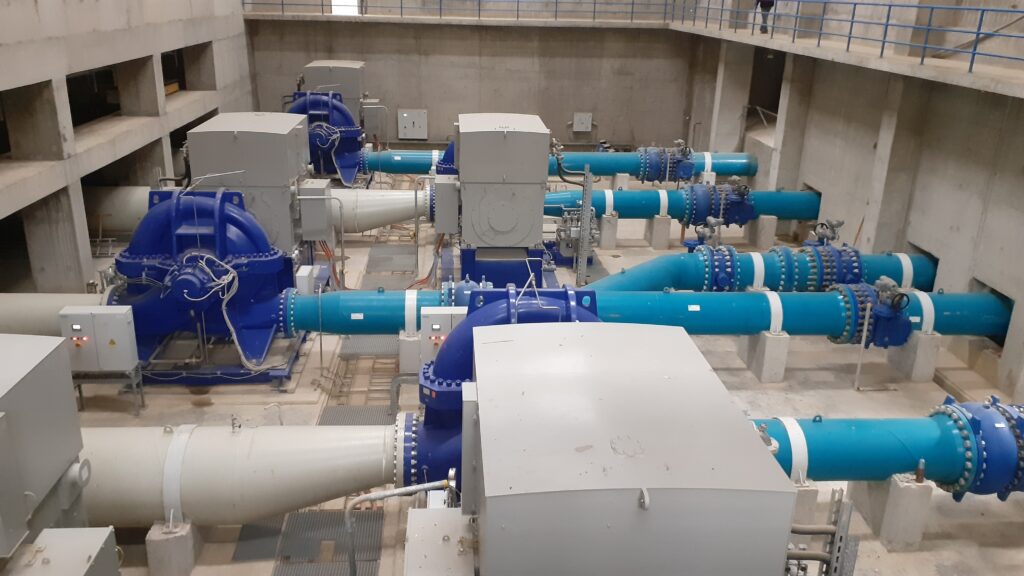
ANSI/HI 9.8-2018 Rotodynamic Pumps for Pump Intake Design
This standard has design guidance around creating hydraulic structures that will not create significant fluid behaviours (excessive vortices, air entrainment etc.) that may be detrimental to the operation of the pumps.
CFD modelling is a measure to provide additional confidence for designs, especially when challenged to meet the design requirements of this standard, and looking to optimise the structure for cost.
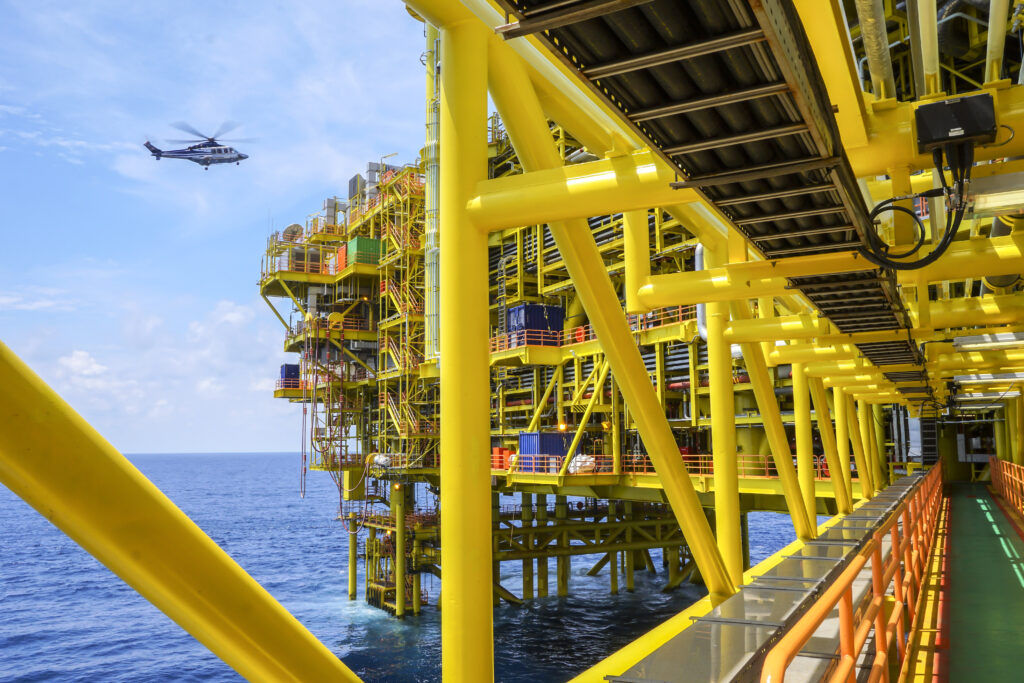
CAP 437: Standards for offshore helicopter landing areas
This UK standard is used to assess the safety of a helicopter landing on an offshore platform. CFD modelling generally undertaken when there are exhausts that impact the flight path. Examining the height and location based on different wind speeds and directions is used to mitigate the impact on helicopter operations which is generally required all the time at these facilities.
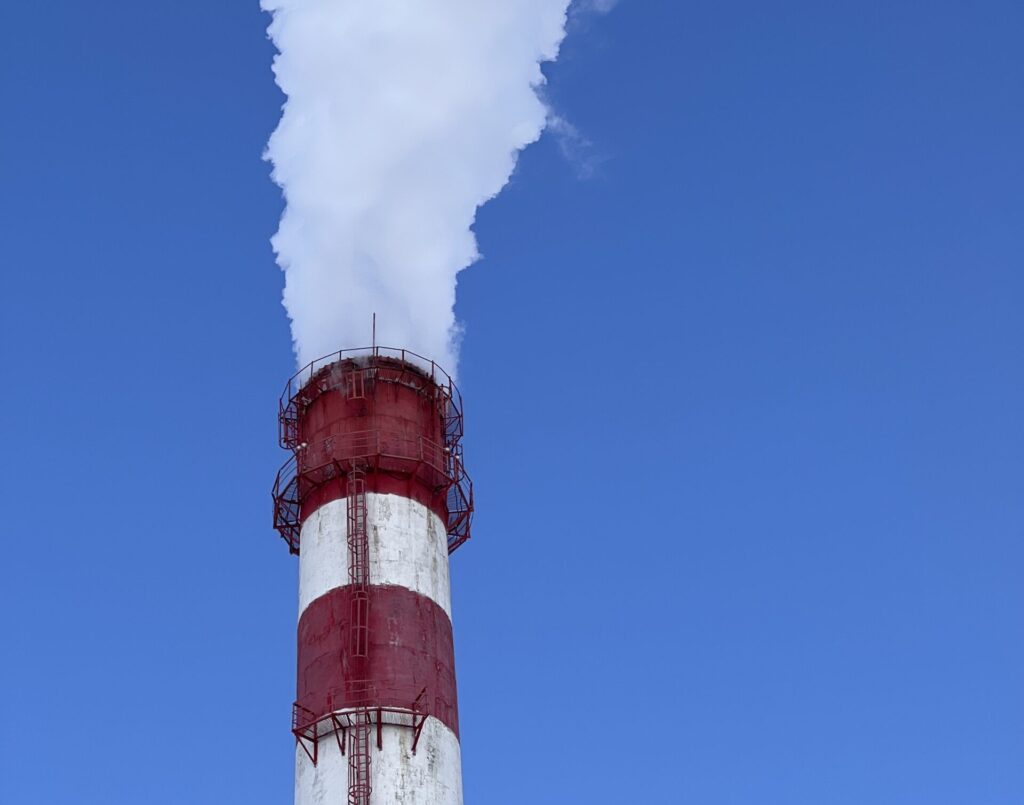
Plume Rise Assessments
The Australian Civil Aviation Safety Authority (CASA) has provided guidance on thermal plumes from facilities and how to assess their impact and whether they need to be put onto aerodrome charts as an obstacle.
CFD modelling is typically used when the standard tools recommended by CASA & US FAA have limitations.
Please Contact Us to discuss how we would structure analyses to meet the requirements of other standards.